

Will the real MVNOs please stand up?
- Details
- Category: Operators
- 19682 views
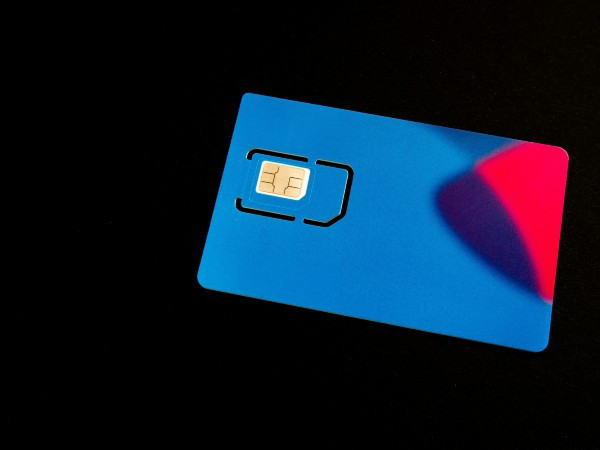
Mobile Virtual Network Operators (MVNOs) are playing an increasingly vital role in spreading connectivity across emerging markets. While they typically operate in smaller-scale environments than Mobile Network Operators (MNOs), MVNOs are often hotbeds of innovation - especially in areas like fintech and mobile-first services that are only now catching on in parts of Western Europe.
By definition, MVNOs do not own their own radio networks. Instead, they lease capacity from MNOs to provide telecom services. This model allows them to focus on niche customer segments underserved by traditional carriers. For instance, in Vietnam, MVNOs cater to factory workers with ultra-affordable data and call plans, while others offer youth-focused packages with unlimited social media usage.
At the end of 2022, global MVNO subscriptions hit 129 million - a year-on-year increase of over 8 million, according to Omdia. Western Europe accounted for 36% of those, while Oceania and Eastern & South-Eastern Asia contributed 27%. Africa, with just 7 million subscriptions, made up 5.4% of the global MVNO market.
One of the most significant recent developments has been in Nigeria, where the Nigerian Communications Commission (NCC) issued 46 MVNO/Mobile Virtual Network Aggregator (MVNA) licences as of July 2024. The goal? To liberalise the telecom market and bring connectivity to underserved regions.
But will this regulatory push actually deliver on its promises?
According to Allan Rasmussen (pictured, below), CEO of MVNO Services, there’s little visible progress nearly a year after the licences were issued. Speaking to Developing Telecoms, Rasmussen noted that while companies like Vitel have secured mobile number series and opened pre-registration portals, no actual launch has occurred. He attributed the delay to reluctance from incumbent MNOs to open up their infrastructure, fearing margin erosion from new competitors.

“There’s pressure on the MNOs with so many licences sold. It’s obviously them who are delaying it,” Rasmussen said. “They keep saying they don’t have the capacity, but at the same time, they’re selling SIM cards every day.”
While the NCC has given MVNOs extended launch deadlines, Rasmussen cautioned against falling into the same trap as Thailand, where lax enforcement by the National Broadcasting and Telecommunications Commission (NBTC) turned the regulatory body into what he called a “licence boutique.” Despite sound policies on paper, Thailand’s MVNO sector has effectively collapsed due to lack of enforcement and MNO resistance.
“Launching 46 MVNOs and MVNAs will cause mayhem through price drops,” Rasmussen said, “but that’s nothing new. It happens in every market as inflated MNO prices start to correct.”
Regulators see MVNOs as a way to improve connectivity and generate additional licensing revenue, while MNOs are more concerned with protecting their bottom lines -even as they collect leasing fees from MVNOs. In the long term, however, a more competitive market could drive down costs, encourage data usage, and fuel economic growth. The GSMA’s Mobile Economy report projected that mobile technologies and services would contribute US$11 trillion - or 8.4% - to global GDP by 2030, up from US$6.5 trillion in recent years.
But not all MVNOs are created equal. Some, like Ryan Reynolds’ Mint Mobile - which was acquired by T-Mobile in 2023 for US$1.35 billion - are created more as brand extensions or marketing platforms than serious telecom players.
In Africa, the most successful MVNOs tend to be financial institutions using telecom services to bolster their core offerings. Omdia MEA Research Manager Thecla Mbongue told Developing Telecoms that banks in countries like South Africa are thriving as MVNOs by using mobile connectivity as a customer retention tool.
“The most successful MVNOs are the ones with an established business model outside telecoms,” Mbongue said. “If you just want to compete on pricing, it’s going to be difficult. The existing operators are too entrenched.”
Rasmussen agreed. While some launch MVNOs in hopes of flipping them for quick profit - à la Ryan Reynolds - he warns that this is a “lottery game” with a high failure rate.
“Serious companies set up MVNOs to complement their main business. They have staying power because they’re not just selling telephony,” he said, citing UK retailer Tesco Mobile, which uses its MVNO to drive grocery sales and customer loyalty.
He predicts a high attrition rate among Nigeria’s licensees: “I expect half of them to die within the first three years after launch.”

Even well-resourced companies can miscalculate. Omdia senior analyst Danson Njue (pictured, above) pointed to Kenya Airways, which launched an MVNO over a decade ago in partnership with Airtel, only to abandon it after discovering that the telecom business was far more competitive than expected.
“Companies often overestimate their capabilities when they get a licence,” Njue said. “It’s not easy to compete in this market.”
For Rasmussen, success depends on a firm regulatory framework and enforcement. He holds up Vietnam, Brazil, and Mexico as models of how to nurture an MVNO ecosystem that expands access while maintaining stability. In contrast, Thailand has become a cautionary tale. The NBTC’s 2013 mandate requiring operators to lease 10% of their capacity to MVNOs was never enforced. As a result, even heavyweights like SoftBank and Verizon exited the Thai market.
In June 2024, the NBTC auctioned off spectrum previously held by state-owned National Telecom - the only MNO leasing to MVNOs - effectively shutting down operators like i-Kool and Penguin SIM. “There are no MVNOs operating in Thailand today,” Rasmussen said, adding that the country’s shrinking number of MNOs has pushed average mobile tariffs above THB400 (US$12), doubling prices in some cases.
Njue warned that African MVNOs face a particularly brutal environment, due to low margins and dominance by major players. “If you’re offering the same service, the bigger player will always have the advantage. That’s one of the biggest barriers to MVNO growth here.”
MVNOs have the potential to bring greater affordability, innovation, and inclusion to telecom markets - especially in regions where MNOs have little incentive to serve low-income or rural communities. But success hinges on more than just issuing licences. Regulators like Nigeria’s NCC must follow through with enforcement, infrastructure mandates, and commercial protections to level the playing field.
Meanwhile, aspiring MVNOs must be realistic. Without a compelling value proposition or synergy with an existing business, they risk being little more than short-lived experiments. Those who treat MVNOs as strategic extensions - not speculative ventures - are the ones most likely to thrive.
Whether Nigeria becomes a model for digital inclusion or another case study in missed opportunity will depend on whether all players - regulators, MNOs, and MVNOs - are willing to play their part.

More Articles you may be Interested in...


Econet AI launch takes place in Zimbabwe




Russian crackdown on VPNs enters new phase



IFC collaboration focuses on Turkey – and beyond




Hughes to bring Wi-Fi to Air India widebody fleet



India’s Jio to bring banking to feature phones


Is Algeria about to open up its satcoms market?
TM Nxera tops out its first AI data centre in Johor