
AI-Powered Networks: The Value Multiplier for Enterprise Digital Intelligent Transformation
- Details
- Category: Wireless Networks
- 8676 views

As digital transformation deepens, enterprise networks are no longer just connectivity tools; they have become the digital foundation that supports full-service operations, internal and external collaboration, and core data flows.
Traditional enterprise networks generally rely on manual O&M, reactive fault response, rigid traffic scheduling, and delayed threat response. This not only consumes much human and material resources but also easily leads to service freezing, delayed fault troubleshooting, and wasted network resources. Such reliance directly restricts the operational efficiency and expansion speed of enterprises. However, the deep integration of AI technology and enterprise networks has completely broken the inherent limitations of traditional networks. It shifts the network from "reactive response" to "proactive prediction," and from "manual control" to "intelligent autonomy." The network has become the driving force for enterprises to reduce costs, increase efficiency, optimize service experience, and strengthen risk prevention, leading to an improvement of enterprise operations and benefits.
The first disruptive change brought by AI-powered networks is the O&M model, which makes O&M much less time-consuming and labor-intensive, and improves network stability. Traditional network O&M requires technicians to monitor services 24/7, relying on the manual analysis of massive logs to troubleshoot root causes. Complex network issues often take hours or more to locate and resolve, easily causing service interruptions during this period.
AI-powered networks can collect and analyze operational data—such as full-network links, bandwidth, latency, and packet loss rates—in real time through machine learning algorithms. By building a dynamic, network-wide perception model, they can proactively identify potential risks like device aging, link hazards, and bandwidth bottlenecks. For common issues like network congestion and node failures, AI can autonomously perform root cause analysis (RCA) and even trigger automated self-healing mechanisms. This allows for the rapid restoration of network connectivity without manual intervention, and drastically reduces fault handling time. Meanwhile, AI can automatically map the network architecture and optimize O&M processes, replacing manual labor in repetitive inspection, configuration, and commissioning tasks. This frees O&M teams from tedious foundational work to focus on technical optimization and service support. It drives down manual O&M costs while improving quality and efficiency.
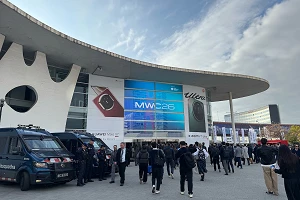
At the recently concluded MWC 2026, Huawei unveiled the Xinghe AI Autonomous Driving Network (ADN) solution, the industry's first L4 ADN solution for campus networks. Targeting enterprise campus scenarios, Huawei's Xinghe AI ADN solution eliminates service bottlenecks through intelligent traffic scheduling and resource optimization. It ensures smoother full-scenario service operations and more efficient collaboration, which directly improves employee productivity and the efficiency of customer services. Today, enterprise service scenarios are increasingly diverse. Requirements like remote work, video conferencing, cross-regional branch collaboration, cloud-based ERP/CRM operations, and IoT device access impose higher demands on network stability, bandwidth allocation, and transmission speeds.
Traditional networks cannot accurately distinguish service priorities, easily leading to issues such as service bandwidth being squeezed, lagging remote collaboration, and slow cloud application loading, which directly impact office efficiency and customer experience. AI-powered networks, conversely, use deep learning to identify the traffic attributes of different services and automatically assign service priorities. They prioritize bandwidth resources for mission-critical services like core production systems, video conferences, and external customer services, preventing lag caused by non-core traffic squeezing resources. For cross-regional branches and remote work scenarios, AI optimizes transmission paths to ensure seamless switching across Wi-Fi, 5G, and VPNs, guaranteeing uninterrupted network connections and making remote collaboration as smooth as local office work. Amid the massive influx of IoT devices, AI autonomously handles device authentication, traffic control, and status monitoring. This allows it to build a solid network foundation for efficient business operations in diverse scenarios, like smart manufacturing and smart offices.
At the network security layer, Huawei's Xinghe AI ADN solution upgrades from passive to proactive defense, fortifying enterprise data and service security perimeters, avoiding hidden losses caused by security risks, and indirectly improving operational efficiency. Traditional network security relies on fixed-rule firewalls and intrusion detection systems, which can only prevent known threats. This type of security often fails to identify novel, stealthy cyber threats like DDoS attacks, ransomware, abnormal data leaks, and internal unauthorized access, leading to delayed defense and undetected risks. Backed by big data analytics and intelligent algorithms, AI networks can model and analyze full-network traffic behavior in real time, accurately identifying unknown threats such as abnormal access, malicious attacks, and unauthorized data transmission.
Breaking through the rule limitations of traditional security tools, AI helps achieve real-time threat perception, rapid blocking, and traceability analysis. Combined with a Zero Trust architecture, AI also performs comprehensive, trustworthy verification of access personnel, devices, and behaviors, applying granular control over network access permissions to eliminate illegal access and data breach risks. This proactive, intelligent defense does not just lower the probability of security incidents and reduce hidden costs like service interruptions, data loss, and compliance penalties. It also gives enterprises the confidence to develop digital services, ensuring operational continuity and stability.
From a long-term benefit perspective, Huawei's Xinghe AI ADN solution achieves a steady reduction of enterprise network costs through granular resource control and full-process efficiency optimization, further amplifying the value it brings. Traditional networks suffer from wasted bandwidth, low device utilization, and high on-site branch O&M costs, invisibly increasing enterprise operational expenses. AI networks monitor resource usage in real time, automatically adjusting bandwidth allocation and device operating power based on traffic fluctuations during peak and off-peak hours to avoid resource waste. In addition, through the iMaster NCE platform, headquarters can centrally manage and remotely debug networks across all national branches without needing dedicated O&M staff at each site, dramatically reducing remote O&M costs. Furthermore, improved network stability and response speeds reduce business losses caused by network lag and interruptions. More productive employees, smooth cross-departmental collaboration, and optimized customer service experiences ultimately translate into improved operational efficiency and economic growth for the enterprise.
By integrating AI with enterprise networks, Huawei's Xinghe AI ADN solution builds an intelligent network system that thinks, self-heals, predicts, and secures. It resolves the core pain points of traditional networks—difficult O&M, low efficiency, high costs, and high risks—while meeting the development needs of enterprise digital services. Across four dimensions—O&M efficiency, service operations, security, and cost control—it drives enterprises to improve quality and efficiency. For all types of enterprises, deploying AI-empowered intelligent networks is not merely a technical upgrade; it is a crucial step in improving competitiveness and achieving efficient, robust development during digital transformation. It provides solid and reliable digital support for highly efficient operation, continuous innovation, and scaled expansion across the business value chain.

More Articles you may be Interested in...


Huawei holds steady as industry headwinds persist







Achieving operator growth in the AI development era

The most "AI-powered" MWC of all time